Life
The Unsung Heroes of Mumbai Visarjan: The Koli Community
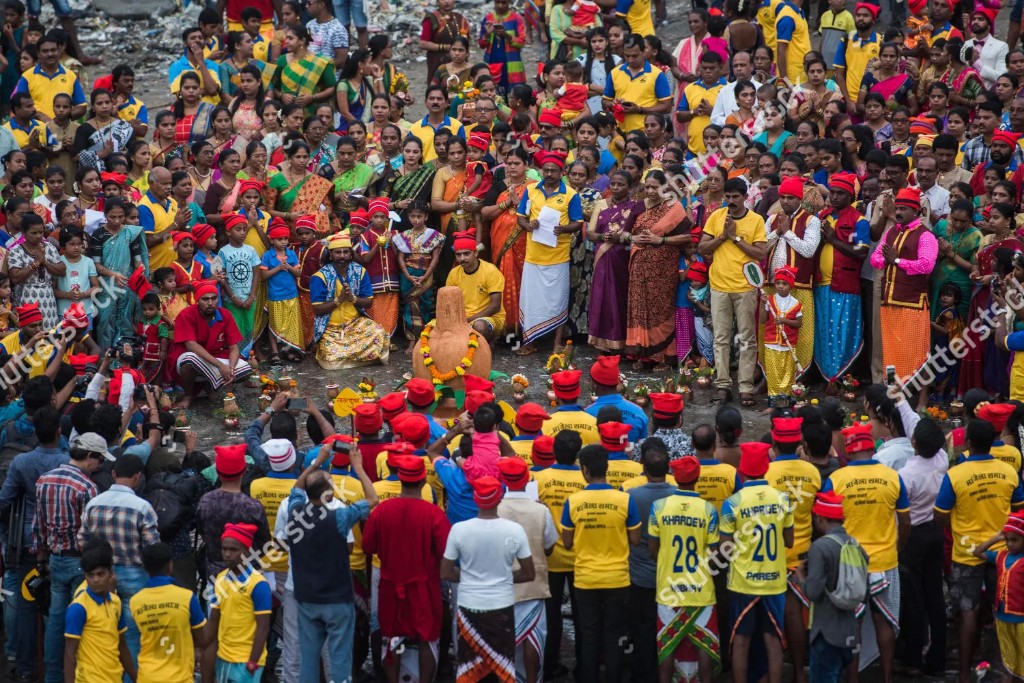
Every year, Mumbai says goodbye to Bappa. Nobody talks about the people who actually make it happen.
I was at Juhu Beach on Visarjan night.
11pm. The processions had been going for hours. Dhol players, DJs on trucks, film stars from nearby bungalows walking with their mandals, news cameras chasing the tallest idols, families crying, strangers hugging, everyone singing Ganpati Bappa Morya one last time.
The energy was overwhelming. The kind that makes your chest feel full and tight at the same time.
And then I looked past the crowd, past the shoreline, into the water.
Men were standing there. Waist-deep. Chest-deep. Some up to their necks. In the dark Arabian Sea. Arms outstretched. Receiving each idol that families carried in. Guiding it. Holding it steady. Letting it go.
No cameras on them. No one chanting their names. No stage, no speech, no garland.
Just the water, and the work, and the quiet dignity of people who have been doing this longer than most of us have been alive.
Those were the Koli fishermen. The original Mumbaikars. The people this city was built on top of, and has mostly forgotten.
Mumbai Is Named After Their Goddess
Before this city was Mumbai, before it was Bombay, before the British built the docks and Tilak organized the festivals and Bollywood made it mythological, there were seven islands.
The Kolis lived on them.
They are the indigenous fishing community of this coastline. Over 2,000 years on these shores. Their villages, called koliwadas, are scattered across the city's edge even today: Versova, Worli, Mahim, Colaba, Malvani, Juhu, Madh Island. You can drive past most of them without noticing. They sit between towers and highways and reclaimed land, holding their ground.
The name Mumbai comes directly from them. Mumba Aai is the goddess the Koli community has worshipped for centuries. Her temple stands at Bori Bunder, near CST station. The city is named after their goddess.
Most people who live here don't know this. Many people who were born here don't know this.
The city took its name and kept building.
What They Actually Do on Visarjan Night
Ganesh Chaturthi is not one event. It is ten days of celebration across thousands of homes and hundreds of mandals, ending in a single night of simultaneous immersion across every beach and ghat in the city.
In 2024, over 150,000 idols were immersed in Mumbai. On Anant Chaturdashi alone, the crowds at Juhu, Chowpatty, Worli, Versova, and Mahim run into the hundreds of thousands.
None of it works without the Koli community.
Here is what they do, without announcement, every single year:
- They arrive before the crowds. Hours before. They walk into the water in the afternoon and check the currents, feel the seabed, mark where it drops off, identify the safe zones where families can wade without risk
- They form human chains from the shore into the deep. A relay of bodies in the water, passing the weight of each idol from hand to hand
- They physically receive the Ganpati from families who can't go deeper. They carry Bappa in
- They watch the shoreline for people who wade in too far and can't swim. Every year, quietly, they pull people out. No headlines
- They stay in the water for ten, twelve, fourteen hours at a stretch
- Their boats are decorated and present during the day, moving slowly near the beaches, part of the procession that no one puts on a poster
At Juhu. At Versova. At Worli. At Chowpatty. At Mahim. At every beach in this city where someone says goodbye to Bappa, the Kolis are already in the water waiting.
They've Been Doing This for Over a Century
When Lokmanya Bal Gangadhar Tilak transformed Ganesh Chaturthi into a public festival in 1893, it was a political act. He wanted to bring communities together against colonial rule. The festival needed the city. The city showed up.
The Kolis have been part of Visarjan since those early years. Their relationship to the sea made it natural, inevitable. This is where they fish. This is where they've always been. When Bappa needed to go home, they were already there.
Their women dance the traditional Koli dance at the water's edge during the processions. It is one of the oldest folk forms in Mumbai, and most visitors to the city have never seen it.
But the image that stays with me is the men in the dark water. Not dancing. Not performing. Just standing, steady, arms out, doing the work.
One Answer That Said Everything
I spoke to a man from Versova Koliwada on Visarjan night. He has been doing this for over twenty years. His father did it before him.
I asked him why he comes every year.
He thought about it for a second, then said:
"Bappa is from the sea. Someone has to bring him home properly."
That was the entire answer. No pride. No complaint about recognition. No request for anything. Just a clean, complete statement of purpose.
Someone has to bring him home properly.
The Koli community has appointed themselves to that task for generations. And they show up. Every year. Without fail.
The City That Keeps Taking Their Land
This is the part that is harder to write.
While the Koli community shows up for Mumbai's most beloved festival, Mumbai has been, for decades, making it harder for them to stay.
Land reclamation has eaten into koliwadas across the city. Development pressure, encroachment, legal disputes over fishing rights, these are not occasional problems. They are the constant background of Koli life in modern Mumbai.
Versova Koliwada has fought repeated battles to protect its land from being classified and sold away. Worli Koliwada, which sits directly adjacent to the Bandra-Worli Sea Link, has watched one of Mumbai's most photographed landmarks go up around them while their own neighbourhood remains invisible in the coverage.
The sea itself has become harder to fish. Pollution in the creeks and the Arabian Sea, industrial competition, the general degradation of the coastline, all of it has squeezed a livelihood that sustained these families for 2,000 years.
Many younger Kolis have moved into other work. The koliwadas are still there, but they are smaller, quieter, more pressured than they were a generation ago.
And still, on Visarjan night, the men walk into the water.
What I Think About Now
I have seen Ganesh Chaturthi in Udaipur. It is beautiful. Intimate. A neighbourhood celebration, warm and contained.
Mumbai is a different kind of thing. Mumbai makes Ganesh Chaturthi into an event that occupies the entire city for ten days. Every road, every building, every beach. It is genuinely unlike anything else I have experienced.
But ever since that night at Juhu, when I looked past the procession and noticed the men already standing in the dark water, I cannot watch Visarjan the same way.
When the moment comes, when a family walks to the edge and hands Bappa over, I look for the person receiving him on the other side.
He is almost always a Koli fisherman.
He is almost always invisible in every photograph taken that night.
He is the reason the goodbye works.
I grew up in Udaipur and now live in Mumbai. Both cities are home. Find me on X.