Life
The Show That Taught India to Shout
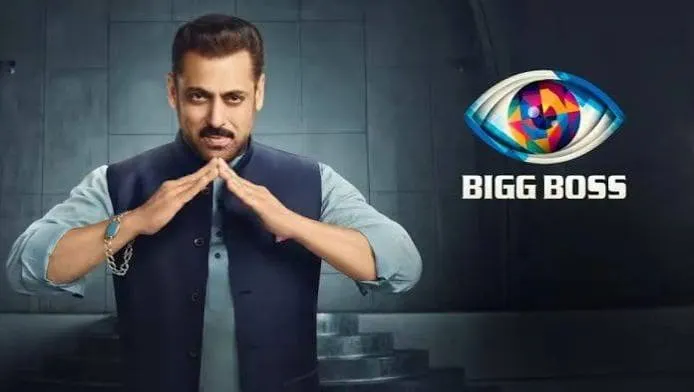
Source: The Print
Picture this.
It’s a weekday evening somewhere in India. In a living room in Patna, a grandmother sits with her grandchildren watching two grown adults shriek at each other over a piece of fruit. In a Mumbai apartment, a group of college friends has gathered to watch a man gaslight his closest ally in the house — and then cheer when he does it cleverly enough. In a small town in Tamil Nadu, a teenager is watching a woman cry on camera, her face three inches from the lens, wondering whether this is what relationships look like.
All of them are watching the same franchise. All of them are being told, in the quiet language of what gets replayed and rewarded, that this is entertainment.
Bigg Boss launched in India in 2006. It is now 2026. In those twenty years, the show has run 19 Hindi seasons, expanded into seven regional languages — Tamil, Telugu, Kannada, Marathi, Malayalam, Bengali — spawned OTT editions, spin-offs, and celebrity specials. It has generated 43.8 billion viewing minutes. One season alone received 540 crore votes from the Indian public. The franchise reaches, by some estimates, close to 500 million people.
Five hundred million.
That is more than the population of the United States and Canada combined. That is one in every three Indians.
And every single one of them has been watching people fight.
We need to talk about what that’s done to us.
How the Machine Works
Bigg Boss doesn’t select housemates for their charm or talent. It selects them for their incompatibility — the person whose politics will clash with another’s, the ex-couple forced back into proximity, the volatile personality who will combust when provoked. The casting is a recipe, and the ingredient it is optimised for is explosive human drama.
Then comes the architecture of the house itself. Tasks are not designed to test skill. They are designed to create situations in which people must compete against each other for resources — food, power, comfort, safety.
Strip away comfort. Create scarcity. Add cameras. Watch what happens.
When things settle down, the producers intervene. A Wild Card entry arrives, specifically chosen to disrupt existing alliances. The host asks pointed questions during Weekend Ka Vaar that reignite conflicts viewers thought were resolved. A task gets introduced that puts the two people currently in the most tension directly against each other.
This is not coincidence. It is production design.
And the people who were inside the house have confirmed it:
- Rubina Dilaik, who won Bigg Boss 14, admitted that being the “channel’s favourite” helps and suggested the show involves scripting
- Hina Khan, a Bigg Boss 11 finalist, publicly called the Season 19 nomination process “fixed” and lacking in transparency
- Avinash Mishra from Bigg Boss 18 accused the production of providing “scripted protection” to select contestants through manipulated narratives
- In December 2024, contestant Eisha Singh was captured on camera appearing to read from a script during a segment
The producers deny all of it. They point to Ernst & Young audits of finale votes to prove integrity.
But here is what is unambiguously true, regardless of whether any specific drama was scripted: the format is engineered for conflict. The incentives reward conflict. The people who get screen time, who go viral, who become household names — they are the people who fight loudest and cry hardest. The boring, stable, kind contestants leave early or are forgotten entirely.
The machine rewards what it wants more of. And what it wants more of is aggression.
The Number That Should Disturb You
Researchers who study media content have counted the acts of aggression in reality television. Their finding:
Reality TV shows contain 52 acts of aggression per hour. Regular non-reality programs contain 33.
That is 57% more aggression per hour than standard television.
And not physical aggression — the kind that comes with consequences in the real world and is obviously coded as wrong. The aggression on Bigg Boss is overwhelmingly verbal and relational. Shouting. Insults. Emotional manipulation. Deliberate sabotage of friendships. Public humiliation. Backstabbing disguised as gameplay.
This is the precise kind of aggression that is hardest for viewers to process correctly, because it isn’t clearly labeled as violence. It happens in the context of normal-looking human relationships. It comes from people whose names we know, whose histories we’ve followed, whose tears we’ve watched.
Psychologists call this kind of normalized aggression a form of social learning. We learn what is acceptable — and what is effective — by watching other people. When we repeatedly see aggressive behavior go unpunished, or worse, get rewarded with screen time, votes, and fame, our brains quietly update their models of how the social world works.
Multiple peer-reviewed studies have documented what follows:
- Viewers who watch high-aggression reality TV are more likely to exhibit aggressive behaviors themselves
- Younger viewers who perceive reality TV as realistic are more likely to see social aggression as normal and even strategic
- Female viewers of docu-soap reality programming showed stronger normative beliefs about aggression after watching
Bigg Boss runs three to four episodes per week, across a three-month season, in seven languages.
We are not watching a show. We are attending a school.
What It Does to the People Inside
Before we get to what Bigg Boss does to its viewers, we should account for what it does to its contestants.
Actor Apurva Agnihotri, who participated in the show, did not mince words: contestants end up taking “psychiatric help” after the show’s conclusion. He said this plainly in an interview — not as a rumour, but as a reported fact.
Consider the environment. You are cut off from family, friends, and all outside information for months. You live with strangers who are competing against you. You are filmed twenty-four hours a day. You know that your most vulnerable moments — your arguments, your breakdowns, your worst words — are being broadcast to tens of millions of people and discussed in real time on social media.
And when you leave, you return to a world that has been watching and judging you for three months.
Bigg Boss 19 illustrated this with unusual clarity:
- Contestant Farrhana Bhatt’s family took legal action against another contestant’s relative, seeking ₹1 crore in damages for “reputational and emotional harm”
- A contestant’s ex-wife began posting Instagram stories about his behavior in the house, dragging the entire extended personal network of real people into manufactured entertainment
These are real people. Their reputations, their relationships, their mental health — all of it fed into the entertainment engine, processed, and served to half a billion viewers.
The format treats human beings as raw material.
The Women Problem
This section needs to be written directly, without euphemism.
If you have watched Bigg Boss across multiple seasons, you have watched this pattern repeat: a female contestant is shouted at by a male contestant, at length, often inches from her face. The footage is replayed. It goes viral. People online debate whether she “provoked” it. At the Weekend Ka Vaar, the host scolds the aggressor — gently, briefly — before moving on to the entertaining content of the week.
The aggressive male contestant remains in the house. He is called “strong” and “passionate.”
The female contestant who responded, or cried, or fought back? She is called “dramatic” or “attention-seeking.”
Research on reality TV and gender has documented exactly this asymmetry. A 2018 study found that female viewers of reality programming showed increased acceptance of sexualized aggression — including coercive tactics — through a mechanism of gender role normalization. When women repeatedly watch media in which male aggression toward women is depicted without serious consequence, it shifts their baseline expectations of what is normal.
Millions of young Indian women watch Bigg Boss. They watch men shout and stay. They watch women who react get criticized. They watch Salman Khan — one of the most powerful men in Indian entertainment — navigate these moments with practiced lightness, making sure nobody is too uncomfortable, making sure we can all tune in again tomorrow.
When the most powerful man in the room treats aggression as manageable background noise, viewers internalize that too.
The Economy of Outrage
Here is the thing about Bigg Boss that its critics often miss: the show doesn’t need you to like it. It needs you to have opinions about it.
The business model has evolved far beyond television ratings. Today, Bigg Boss generates revenue through:
- Votes people pay to cast
- Branded tasks that are advertisements in disguise
- OTT subscriptions driven by exclusive content
- The social media conversation that runs parallel to the broadcast
- The influencer ecosystem it creates around former contestants
None of this requires you to enjoy what you’re watching. Outrage drives engagement just as effectively as admiration. The person tweeting “I can’t believe what [contestant] just said” is serving the machine just as loyally as the fan posting appreciation.
Controversy is not a side effect of Bigg Boss. It is the point.
This is why the show consistently casts contestants with pre-existing controversies, unresolved relationship drama, or documented volatile behavior. Not despite the potential for explosions — because of it.
There is now an entire media ecosystem that lives off Bigg Boss — YouTube channels dedicated to daily recaps, Instagram pages that track every alliance shift, Reddit threads dissecting every conversation, Twitter trends that spike with every fight. Most of this content is produced and consumed by people who would tell you, if you asked, that the show is stupid and toxic.
But they’re watching.
Bigg Boss OTT on JioCinema broke digital viewership records with over 10 crore viewers for one season. The franchise has grown every year it has existed, absorbing criticism, surviving controversy, expanding into new languages and new platforms — because the engine works and there is no shortage of fuel.
We are the fuel.
The Aspiration It Sells
Twenty years ago, a young person from a small Indian city who dreamed of being famous had limited options. They could pursue acting through the conventional struggle. They could try sports. They could hope to be discovered somehow, somewhere.
Today, that same young person watches Bigg Boss and understands that there is a faster path.
You don’t need training. You don’t need talent. You need to be willing to live your worst moments on national television, to fight in public, to make enemies, to cry on demand, and to survive long enough for people to vote for you.
This is now a viable career path.
The formula is legible to anyone paying attention:
- Don’t be boring, because boring people get eliminated
- Create conflict, because conflict creates screen time
- If you have pre-existing personal drama, bring it inside the house — the producers will reward you with visibility
We have built a system that selects for these qualities, rewards them with money and fame, and broadcasts the results to 500 million people. And we are surprised when critics worry about what it is teaching the next generation about what success looks like.
The aspiration it sells is not: be talented, work hard, develop something worth admiring.
The aspiration it sells is: be willing to make a spectacle of yourself, and the country will reward you for it.
The Deeper Question
I want to be careful here, because the easy conclusion — “Bigg Boss is bad, stop watching it” — misses something important.
Bigg Boss didn’t invent the human appetite for watching conflict. That appetite is ancient. Roman gladiatorial games. Public executions. The stocks in the town square. The tendency to gather and watch when something violent or humiliating is happening is not a creation of Indian television in 2006. It is a feature of human psychology that has been there for as long as we have records.
What Bigg Boss did was industrialize it.
It took that appetite and built a year-round machine that produces conflict on demand, distributes it at scale, monetizes every second of engagement, and optimizes the product based on which conflicts generate the most attention. It removed the friction and the shame from consuming this content by making it mainstream — making it Salman Khan’s domain, making it something you watch with your family on a weeknight.
The question isn’t whether you’re a bad person for watching Bigg Boss. Most people aren’t.
The question is whether we’ve thought clearly about what we’re participating in when we do.
When we vote, we are funding the next season. When we discuss the contestants online, we are extending the show’s reach. When we watch because we’re angry at what happened, we are proving to the producers that anger works as a retention mechanism. When we introduce the show to our children as harmless family entertainment, we are making the first of many decisions about what they will absorb as normal.
Researchers who study media effects make an important distinction: a single exposure rarely changes behavior meaningfully. What changes behavior is repeated, normalized exposure over time. One episode of Bigg Boss is not going to rewire anyone’s brain. But twenty years of seasons — across seven languages, reaching half a billion people — is a different calculation entirely.
What We’re Really Choosing
India is not short of things to watch.
We have a filmmaking tradition that produced Mughal-E-Azam, Sholay, Lagaan, and Gully Boy. We have documentary filmmakers doing extraordinary work. We have regional cinema in Malayalam, Tamil, and Marathi that has been recognized internationally as among the best being made anywhere. We have web series that take complex characters seriously.
We also have Bigg Boss — which has run for 20 seasons and counting, because the market responds to what we choose, and we have chosen this reliably, repeatedly, across the entire country, in every language, across every platform, for two decades.
The show will continue as long as we participate. That’s not a moral argument. It’s just how markets work.
What I’m asking is smaller than a boycott.
I’m asking whether we’ve been honest with ourselves about what we’re actually getting from it. The thing we tell ourselves — that we’re just having fun, that it’s harmless, that we don’t take it seriously — doesn’t quite hold up when you look at the numbers. You don’t give 540 crore votes to something you’re casually dismissing.
We’re invested. Deeply.
That investment has costs that mostly don’t show up in the moment you’re casting a vote or watching the highlight clip. They show up slowly — in what we consider normal, in how we expect conflict to unfold, in what we think fame should look like, in what we believe powerful people owe the people they hurt.
The show has been teaching us for twenty years.
The question — the only question worth asking — is whether we’ve been good students.
I write about Indian culture, building things, and the parts of growth nobody talks about. Find me on X and YouTube.