Life
I Live in Mumbai. Here’s What I’d Actually Tell You to Do.
The honest insider guide: food, nights out, temples, and the things most tourists completely miss.
People ask me this constantly.
"Prayush, I'm coming to Mumbai for 3 days. What should I do?"
And every time, I fight the urge to say: three days is not enough. Mumbai is not a city you visit. It's a city you survive, fall in love with, and never fully figure out. I've lived here for years and I'm still finding places.
But if you've got a few days, here's exactly what I'd tell a friend.
First: Understand How Mumbai Works
Mumbai is not one city. It's eight cities stacked on top of each other, connected by locals and autorickshaws and an inexplicable shared understanding that everyone is always in a hurry.
There's South Bombay. Old money, old buildings, the kind of streets that feel like they belong in a different century.
There's Bandra, where the cool kids live, where the cafes never close, where every second person is either an actor or someone who wants to be.
There's Juhu, Andheri, Versova up north. More residential, more real, the Mumbai that actually pays rent.
Don't try to do all of it in one trip. Pick a base, explore outward.
Food: The Actual Reason to Come to Mumbai
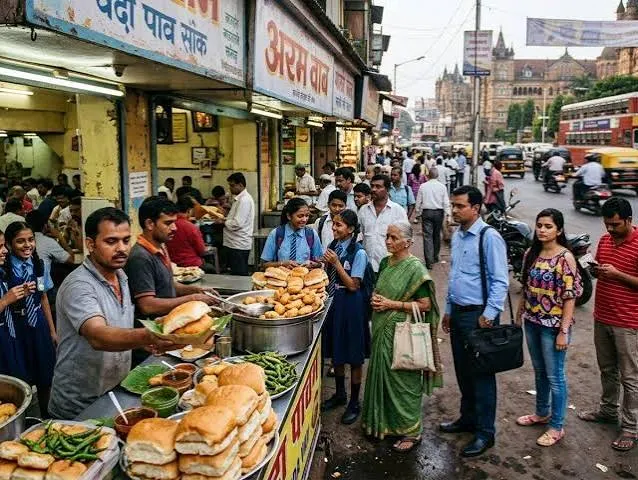
Mumbai's food will ruin you for other cities. I say this with full awareness.
Start with the street food. Non-negotiable.
- Vada Pav is Mumbai's soul food. Get it from a street stall, not a restaurant. Ashok Vada Pav near Vile Parle is the gold standard. One bite and you understand why Mumbaikars are intensely proud of this ₹15 thing.
- Bhel Puri at Juhu Beach in the evening. The chaos, the salt air, the vendors, this is the real Mumbai.
- Bademiya, Colaba is late night seekh kebabs and rotis on the street. It's been here since 1946. Go after 10pm when it's actually alive.
For a sit-down meal:
- Britannia & Co (Ballard Estate) is Parsi food, run by a family that's been doing it for over 100 years. The Berry Pulao is unlike anything you've eaten. Book ahead or go early. Boman Kohinoor, who runs it, might still be there talking to every table. This place is a Mumbai institution.
- Mahesh Lunch Home (Fort). If you eat seafood, this is mandatory. Butter garlic crab. That's all I'll say.
- Mohammad Ali Road during Ramadan. If you're visiting in the right season, this is a bucket list experience. Nihari, Sheer Khurma, Malpua. Every stall is better than the last.
- The Table (Colaba). For a special dinner. Consistently one of the best restaurants in the country.
- Bastian (Bandra). Seafood, great atmosphere, long waits. Worth it.
Breakfast:
- Kyani & Co (Marine Lines) is an Irani cafe that's been running since 1904. Bun maska, chai, and the specific feeling of sitting somewhere that has outlived everything around it.
- Sassoon Docks (Colaba, early morning). Not a restaurant. It's the fish market at 6am. Go once, just to see it. The scale, the smell, the chaos of Mumbai's oldest fishing community unloading the night's catch.
Places That Will Stop You Mid-Step
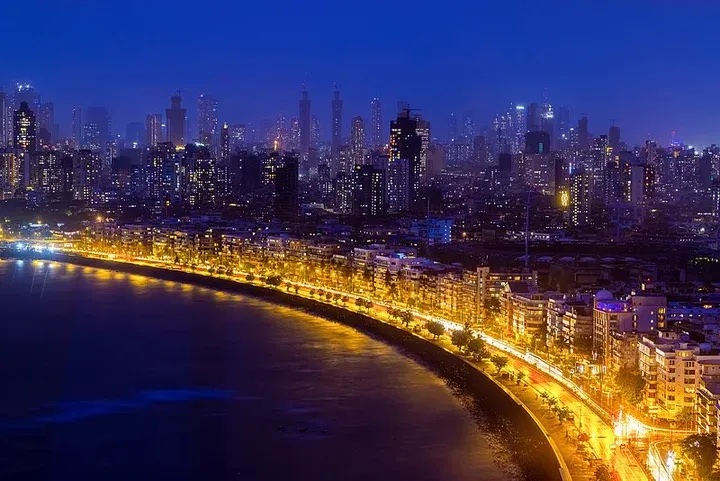
Marine Drive. Walk this at night. The Queen's Necklace, they call it. The arc of streetlights along the Arabian Sea. Sit on the promenade, watch the city, feel very small in the best possible way.
Gateway of India. Everyone goes here. Go anyway. Early morning before the crowds, when the light hits the water and the harbour is quiet. Different experience entirely.
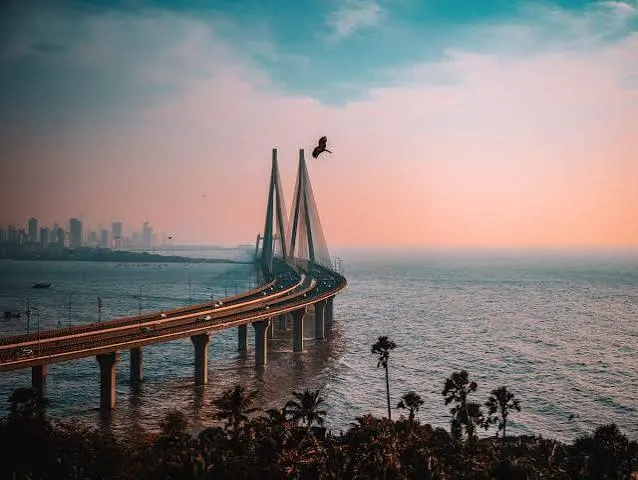
Bandra-Worli Sea Link. Cross it in a cab at night. It doesn't make sense to see from the outside what Mumbai looks like from its own edge.
Dharavi. I'd recommend a guided walk (Reality Tours runs one). It's one of the largest urban settlements in Asia and completely nothing like what you think. The textile businesses, the recycling industry, the bakeries, it's a working neighbourhood, not a poverty exhibition. Go with the right company and open mind.
Elephanta Caves. Take the ferry from Gateway of India. UNESCO heritage site. 6th-century rock-cut temples to Shiva. The ferry ride alone is worth it.
Khotachiwadi (Girgaon). A heritage village sitting impossibly in the middle of a Mumbai suburb. 200-year-old Portuguese-style bungalows. You will feel like you've stepped into another world. Almost no tourists know it exists.
Temples, Dargahs, and the Sacred Mumbai
Mumbai takes its religion seriously. Every corner has a shrine. Here are the ones worth making a proper visit.
Siddhivinayak Temple (Prabhadevi). The most famous Ganesh temple in Maharashtra. Lines can be long. Go early or on a weekday. The energy inside is unlike anywhere else, film stars, businessmen, students, grandmothers, everyone folded into the same queue asking for the same things.
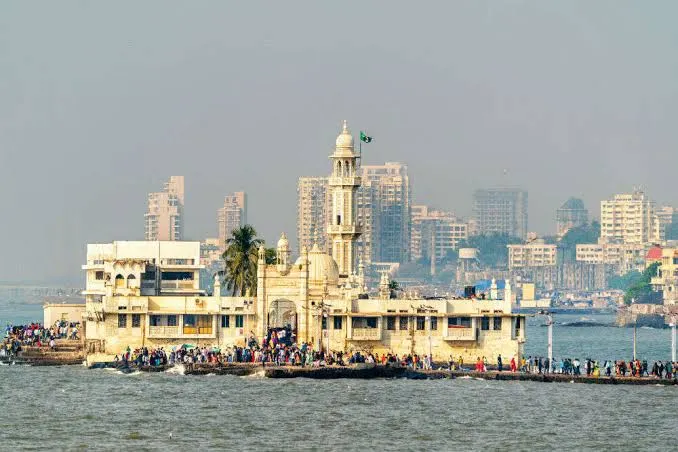
Haji Ali Dargah is a mosque and dargah built on a small islet in the Arabian Sea, connected to the city by a narrow causeway. Come during high tide if you can, the walkway almost disappears into the water and the dargah seems to float. One of the most visually striking religious sites in India. Remove your shoes at the entrance, cover your head, and just absorb it.
Mahalakshmi Temple. Adjacent to Haji Ali. Three deities in one temple, enormous religious significance for Mumbai. The combination of Haji Ali and Mahalakshmi in one walk along the seaface is something very specific to Mumbai, a Muslim shrine and a Hindu temple, 500 metres apart, both full of people.
Mount Mary Church (Bandra). A 16th-century church on a hill overlooking the sea. Peaceful, beautiful, the kind of place that settles something in you regardless of your faith.
ISKCON Temple (Juhu). If you've never been to an ISKCON temple, Juhu is a beautiful one. The evening aarti is worth attending. The prasad is also genuinely good.
Banganga Tank (Walkeshwar). A sacred tank in the middle of South Bombay, surrounded by ancient temples, with high-rises looming behind them. One of the strangest contrasts in Mumbai.
Nights Out
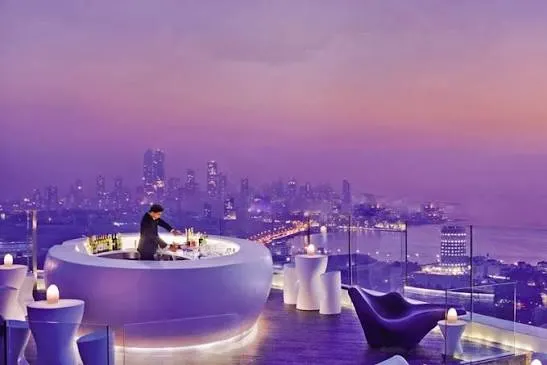
Mumbai genuinely does not sleep and the nightlife reflects this.
For rooftop drinks with a view:
- Aer (Four Seasons, Worli). One of the best rooftop bars in the country. Views of the Sea Link and the harbour. Not cheap, but the view earns it.
- Dome (InterContinental, Marine Lines). Rooftop overlooking Marine Drive. Iconic.
For clubs:
- Koko (Churchgate). Multi-level, good music, South Bombay crowd.
- Tryst (Lower Parel). Massive space, consistently good nights, more accessible.
- Antares (Bandra). If you're based in Bandra, this is the move. Restaurant downstairs, bar upstairs, sea view.
For a low-key evening:
- Woodside Inn (Colaba). A proper pub. Old wood, good beer, conversation-level music.
- The Bandra Edit (Bandra). Neighbourhood bar energy without the club prices.
- Carter's (Bandra). Beloved institution. Long tables, packed on weekends, reliable fun.
Shopping
Colaba Causeway. Street market for everything: clothes, jewellery, bags, shoes. Bargain hard. Budget 2 hours minimum.
Chor Bazaar (Mutton Street). The antique market. Old furniture, vintage cameras, colonial-era pieces, brass artifacts. Whether you buy anything or not, walking through it feels like archaeology.
Linking Road (Bandra). Mumbai's answer to fast fashion. Good finds if you have patience.
Crawford Market. Fresh produce, dry fruits, spices. The building itself is worth seeing, it was designed by the father of Rudyard Kipling.
The Things Nobody Tells You

Take the local train at least once. Not at rush hour if you can help it. The Western Line from Churchgate to Bandra gives you Mumbai from the window, slums, towers, building sites, churches, all of it passing by at 80 km/h.
Eat at Irani cafes whenever you see one. These Persian-origin cafes, Kyani, Britannia, Cafe Mondegar, Cafe Leopold, are Mumbai's original third spaces and most of them are slowly disappearing. Go while they're still here.
The city looks different at 6am. Dabbawalas collecting tiffins, fish markets winding down, joggers on Marine Drive, the city before it remembers to be loud. Worth one early morning.
It will take your heart. Not immediately. Mumbai isn't charming the way Udaipur is charming. It earns it, in the second week, in the moment you figure out the local train system, in the chai you had at a tapri after a long day. Slowly, then all at once.